In June 2025, the Green YOUth Changemakers project brought together 24 young participants and decision-makers from Romania and Bulgaria for a study visit in Brussels, the capital of the European Union. Over four days, the group explored European institutions, met policymakers, and learned about opportunities for youth engagement in building a greener future.
The programme opened with an official welcome session, where participants introduced themselves through interactive activities. A session on fears and expectations allowed everyone to share their hopes and concerns for the visit.
This was followed by a recap of what had been achieved so far in the project – from environmental workshops and advocacy training to community actions. Participants reflected on their personal growth and the collective achievements of the group.
The day ended with team-building activities and informal social time, which helped strengthen the intercultural bonds between the Romanian and Bulgarian participants.
The second day was the highlight of the visit. Participants were welcomed at the European Parliament, where they had the opportunity to meet Members of the European Parliament (MEPs), including Ilia Lazarov (Bulgaria) and Nicu Ștefănuță (Romania), Vice-President of the European Parliament.
Discussions focused on major European priorities such as the Green Deal, emission reduction, the circular economy, and measures against plastic pollution. Young people presented the outcomes of their work in the project, including the EcoFighters campaign and their own environmental advocacy proposals.
In the afternoon, participants toured the European Parliament, gaining insight into the decision-making processes of the EU. This experience reinforced the idea that youth voices must be included in shaping European policies.
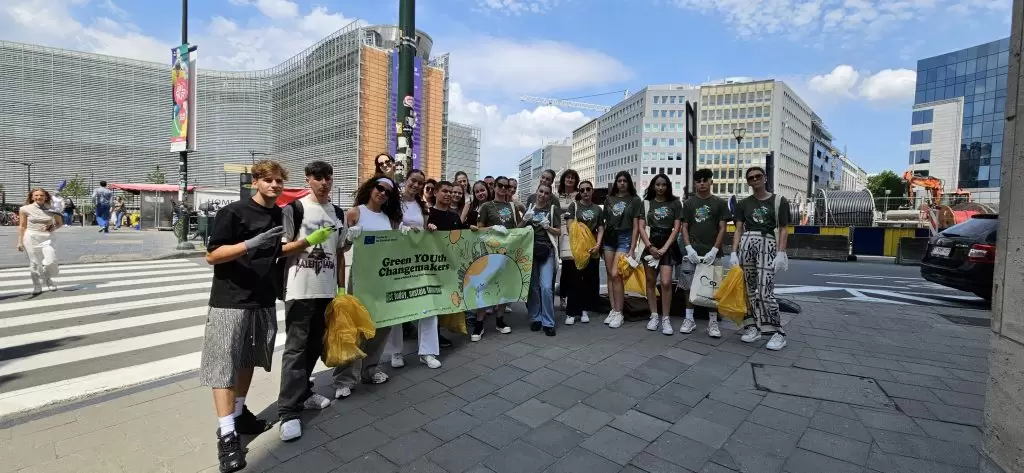
The third day combined practical environmental action with civic engagement. In the morning, participants joined a plogging event in the streets of Brussels, jogging while collecting litter. The activity symbolised the combination of sport, health, and environmental responsibility, while also drawing the attention of local residents.
Later, the group visited the Parlamentarium, the interactive museum of the European Parliament. Through immersive exhibits, they learned about the history of European integration, the role of EU institutions, and the shared values of democracy, solidarity, and sustainability.
In the afternoon, participants met with local NGOs, exchanging experiences and identifying opportunities for collaboration on environmental and civic initiatives. This dialogue highlighted the importance of connecting local and European perspectives in order to generate long-term impact.
The final day of the study visit was dedicated to reflection and planning. In structured workshops, participants discussed the next steps of the project and how to implement the advocacy action plans prepared during earlier mobilities.
A final evaluation session allowed the group to share their impressions of the Brussels experience, highlighting the inspiration they gained from interacting with policymakers and institutions.
The mobility concluded with a YouthPass ceremony, where participants received certificates recognising the competences developed – from intercultural communication and teamwork to policy advocacy and civic engagement.
The Brussels study visit was a milestone for the Green YOUth Changemakers project. By combining institutional visits, advocacy practice, environmental action, and NGO networking, the programme gave young people both knowledge and inspiration.
Participants returned home motivated to strengthen dialogue with local authorities, implement community initiatives, and continue advocating for climate action. The visit confirmed that young people are not only beneficiaries of European policies but also active contributors to their creation and implementation.
The Brussels mobility was not only a learning experience but also an impulse for action. Participants returned home better informed, more motivated, and more determined to lead change in their communities.